Showing posts with label medicine. Show all posts

Saturday, October 8, 2016

The Cry of the Mothers

This is a story of my childhood and the books I read. It tells you the great miracle of the revival of the Hebrew language.  This little girl just arrived from Iran in Israel of the 50's and she has access to world literature translated to Hebrew.  It also tells about a curious girl relating to stories about motherhood, childbirth, hygiene and bigotry.

I vividly remember two of the early books that I read when I was nine or ten.  My family was still living in the same small house with my grandparents and my uncles.  My oldest uncle Moshe subscribed to a library of books translated to Hebrew. One of these books was The Good Earth.  By Pearl Buck.  Many of you know  this book about the life of women in China.  The other one was The Cry of the Mothers.  By Morton Thompson.  About Ignaz Semmelweis, the early pioneer of antiseptic procedures.
The Hebrew Title:
זעקת האמהות  - מורטון תומפסון


I was reminded of this story today while listening to my weekly radio program reviewing world press.  The French magazine "Historia" has just published an article about the life of Ignaz Semmelweis. 
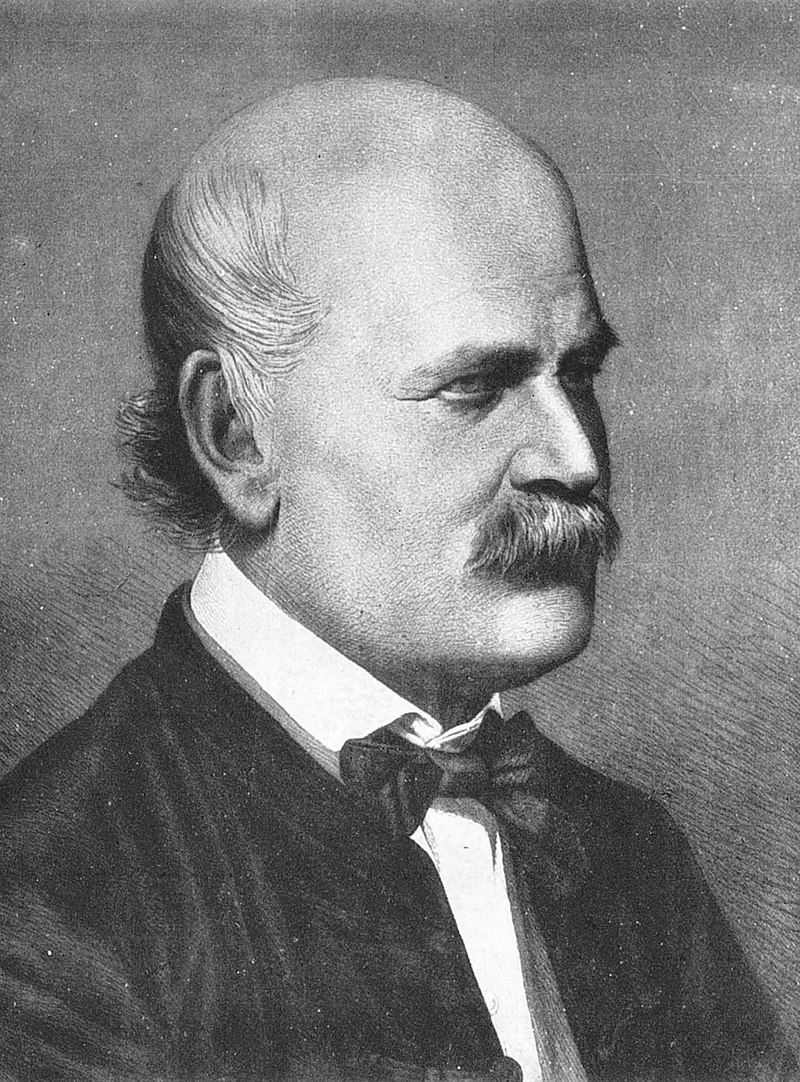
An engraved portrait of Semmelweis: a mustachioed, balding man in formal attire, pictured from the chest up.


Ignaz Semmelweis is a curious child who often gets in trouble at school for asking too many questions. As a young man, he travels from his native Hungary to Vienna to study medicine, becoming an obstetrician at the Vienna Lying-In (labor and delivery) Hospital. At that time, in the first half of the nineteenth century, European women giving birth are ravaged by puerperal fever, a form of bacterial infection, before the germ theory of disease or antibiotics were known. The hospital unit operated by the medical school for training physicians had triple the death rate of that of the unit run by the midwives. To find out why, Semmelweis embarks on a painstaking investigation. Without knowing the mechanism at work, he discovers that infection is spread from one patient to another by contact, facilitated by frequent patient exams made by the medical students. Over the resistance and ridicule of the hospital administration and staff, he develops and implements a strict practice of hand washing with disinfectant before every patient contact. This brings the hospital death rate down to practically zero. Even so, the hospital administration and general medical community refuse to adopt Semmelweis’s ideas or practice. Enraged at the medical establishment’s failure to save lives by this simple procedure, Semmelweis writes letters to medical journals accusing physicians of being murderers. Eventually, more and more overwrought by his frustration, he becomes unbalanced, passing out handbills in the street telling women to demand of their doctors that they wash their hands, and otherwise behaving so erratically that he is committed to an insane asylum, where, ironically, through a cut finger he contracts and dies of the very disease he spent his life fighting.

A legacy of Semmelweis, highlighted in The Cry and the Covenant, is that hand washing, to this day, remains the most effective method of preventing the spread of infection.


Semmelweis statue at the University of Tehran.

What a sad end to the life of a brilliant man!
We can blame those Viennese doctors who could not accept the fact that their hands were "dirty".




Wednesday, April 13, 2016

Basic Science #7: Albumin

Albumin is a large abundant protein in our blood.  When blood is collected in a tube and left to stand, the red cells, containing hemoglobin will sink to the bottom.  The liquid on top is called serum or plasma.   Albumin gives it the yellowish color.  Serum also contains various components important for our overall health.  The white blood cells and platelets will be in between these two layers - in the interphase.


We should all know about a blood test for Albumin (by my health care provider):
Normal amounts of Albumin: 3.3 - 4.8 g/dL. Albumin is a protein that is made in the liver and released into the blood. It helps keep the blood from leaking out of blood vessels. Albumin also helps carry some medicines and other substances through the blood and is important for tissue growth and healing.
Chemistry of albumin: Human serum albumin - HSA is made of 609 amino acids.  (Yes six hundred and nine amino acids!)  Bovine serum albumin - BSA has a very similar chemistry with small differences in amino acid sequence.   Here is the 3D structure of both proteins pointing out this specific difference:

Human and Bovine Serum Albumin:


The similar structure of albumin in various organisms can be followed from lower organisms to higher ones.  This is the scientific base of evolution.  In comparative genetics the scientists can compare the amino acid sequence of mouse, rat, dog, bovine and human and show the homology.  There is a higher fit or homology between human and bovine, than between human and mouse.
Albumins belong to a group of proteins described as globular proteins, referring to their spherical shape.  This shape makes them soluble in water, so their location in the cell is in the aqueous, or water environment.  Some proteins are membrane proteins which means they are not soluble in water and will be attached to the cell wall or membrane. 
An important aspect of biochemistry of proteins is transport of nutrients or drugs depending on their solubility in water.  Albumin has an important role as a “universal” solvent.  Here you can see how Albumin can attach various molecules as fatty acids which are lipids, or calcium which is a small ion, and transfer them through the blood to their destination in the body.


Albumin attached to various drugs and nutrients:


In this post on Albumin I have introduced the principles of soluble and membrane proteins and some basis of evolution. I hope more people would study these topics and learn to appreciate our amazing complex biology.

Tuesday, March 1, 2016

Political Balance in a Democracy

We hear about the phenomenon of Donald Trump having such an unstoppable run to become a Republican candidate for president of the United States. Two of my good intelligent friends told me they will vote for him as they are staunch republicans. It is the kind of people who say anything is better than Hillary, or Obama was the worst thing that happened in the USA.   
One of these friends told me: "Sara, there is no justice there never was and there never will be justice." This may be true but it does not stop me from striving for justice, truth, knowledge. 
We are all proud to be part of the American democracy. How do we improve it?  I want to present some of my ideas of finding balance in our divided politics. 
People will tell you that capitalism is the reason for the economic success of this country. I can show you here where pure capitalism fails. By pure capitalism I mean judging every move by the immediate monetary returns. What is lacking in this policy is a long term vision of the economy and welfare of the citizens. Here are a few examples of where we can improve. 
Nutrition: We have large successful food companies that provide us with fully stacked supermarket shelves. There is no lack of food or malnutrition like in many other places in the world. The downside is that in order to maximize shelf life and so profits the packaged food is loaded with sugar, fat and salt. No one suspected that there is anything wrong with this. No one thought that we are losing balance here. There is over nutrition that our physiology is not equipped with defense mechanisms against it. So we have to deal with epidemic levels of high blood pressure, obesity, cancer. To find balance the food industries should have a minimum degree of social responsibility
Education: I am so lucky to have gotten my education for free back in 1960’s Israel!  Today in the US most people need to get college loans to complete their education and they are burdened with heavy debts when they start their career.  I am even hearing this idea that we do not have enough teachers and universities to give a college education to all.  This idea is completely out of balance.  We can put more people to work building more universities!  There is nothing as important and essential as passing knowledge to future generations.  Again: we need a long term policy!  In addition we now have the internet with an ever growing number of educational websites for every learning disability imaginable.  There is no reason whatsoever that anyone who wants to learn cannot learn!
Clean water and air:  For a balanced political policy clean air and water are essential.  The people who claim it is too expensive to switch from oil to solar energy have no long term vision.  There is abundance of water in the world.  We need all the bright brains to have the knowledge to develop better ways to deliver clean water to as many people as possible.
Health care: A viable democracy requires a healthy knowledgeable electorate.  I had many arguments with those who oppose affordable health care for all.  The last of their points was that we do not have enough doctors and hospitals to care for everyone.  Again there is no long term vision here.  Why did we get to this place?  Why can't we train more doctors?  Why can’t we put people to work building more hospitals? 
I believe in balance between conservative and liberal ideas, tradition and progress.  But if we have an uneducated poor electorate with no affordable health care, why are we surprised that Donald Trump is so ahead in the polls?  We now have citizens with limited education and questionable health overwhelmingly voting for Donald Trump. I wonder if they learned in school about the rise of Hitler. 


Tuesday, February 9, 2016

Why are you Still Alive?


I heard about this article published by the Readers Digest last November.  This should interest all of us as we are hearing about the zika virus affecting the babies born to women infected by the virus.
We should remember that just one hundred fifty years ago life expectancy in humans was no longer than forty years.  People did not always live to see their grandchildren, let alone great grandchildren.  These days people in the developed world live into their eighties and nineties and are still healthy and active.
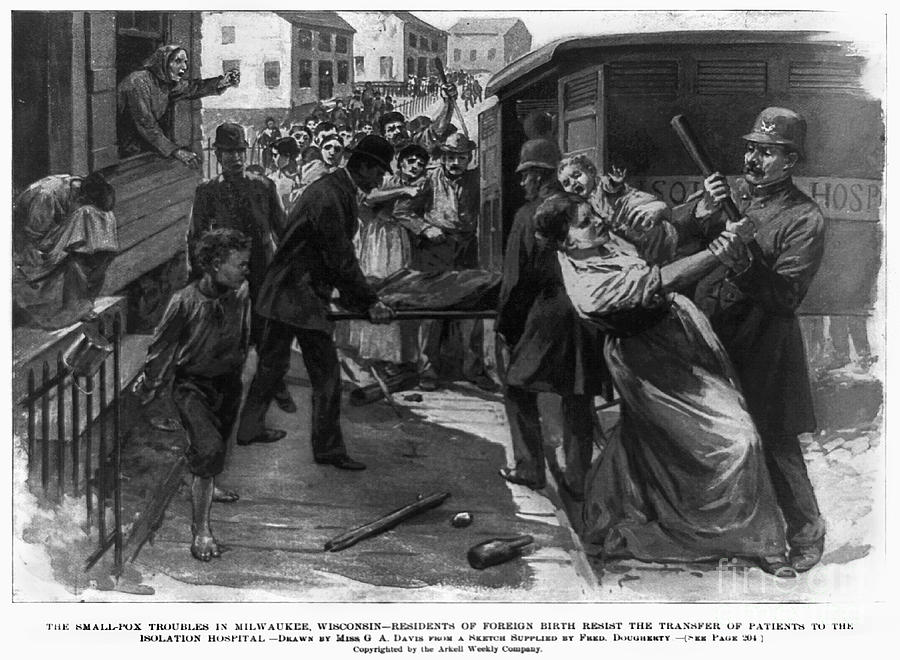
It is important to understand the progress that brought about this long life expectancy.  On the top of the list is the fact that we learned to cure bacterial and viral diseases.  Smallpox was a viral disease that killed more people than any other illness or factor.

Smallpox-1894

We also managed to abolish disease as bacterial TB and cholera which causes loss of water.
Next on the list is the fact that we learned to use soap to clean up and mainly wash our hands.  We learned to avoid touching bacteria and transferring them to anything we touch.
The houses in which we live protect us from the weather, rain storms, winds and heat.  Modern houses are well  air conditioned unlike the  poor huts in the third world.
At last we should appreciate the clean running water in our modern homes.  This is thanks to the governments who provide this service of providing running water.  And note where the government of Michigan failed its citizens in Flint.  It is not taken for granted that governments can always be trusted.
It is important to remember what is keeping us alive and healthy for so long!