Monday, October 24, 2016

Costa Rica Trip: Monteverde Cloud Forest

We rode the bus up the hill to the cloud forest trusting the steady hand of our driver Juan Carlos.
It was raining all the way up and we all had to use our rain gear for a walk into the forest.  This was all so new to me.  The rain forest is an important source of oxygen for our environment.  Costa Rica is one of the leading countries in protecting the environment.  We saw trees that I never saw before.  Walking Palms?  Yes, these trees have a root structure that allows them to uproot in one location and then settle again in a sunnier spot.
Another tree is strangled by bromeliads or such plants which grow on their trunks and suck out water and nutrition:

After spending the night at El Establo hotel we drove back to the cloud forest for more adventures.
We visited the humming bird gallery:

We walked on 8 hanging bridges. We got to see the top of the forest!

We enjoyed the butterfly gardens with such variety of caterpillars, cocoons and colorful butterflies:


We all posed for a group photo:


Costa Rica Trip: Tamarindo


Our first trip from San Jose was to Tamarindo in the Guanacaste region of Costa Rica.  We arrived at the beautiful Esplendor of Tamarindo hotel near sunset,  We had this beautiful view of the ocean:


The hotel lobby had a beautiful ambiance.  It was open on each side and the ceiling fans were blowing to cool the tropical air.  Yellow, flower shaped fans, lovely to look at: 


We enjoyed swimming in the beautiful pool with the water flowing into a lower canal around the pool:


We rode the hotel shuttle to town and relaxed by the beach:


I have to tell you about our bus driver: Juan Carlos!  He was most polite and courteous, never failed to help us down the bus steps:


Saturday, October 8, 2016

The Cry of the Mothers

This is a story of my childhood and the books I read. It tells you the great miracle of the revival of the Hebrew language.  This little girl just arrived from Iran in Israel of the 50's and she has access to world literature translated to Hebrew.  It also tells about a curious girl relating to stories about motherhood, childbirth, hygiene and bigotry.

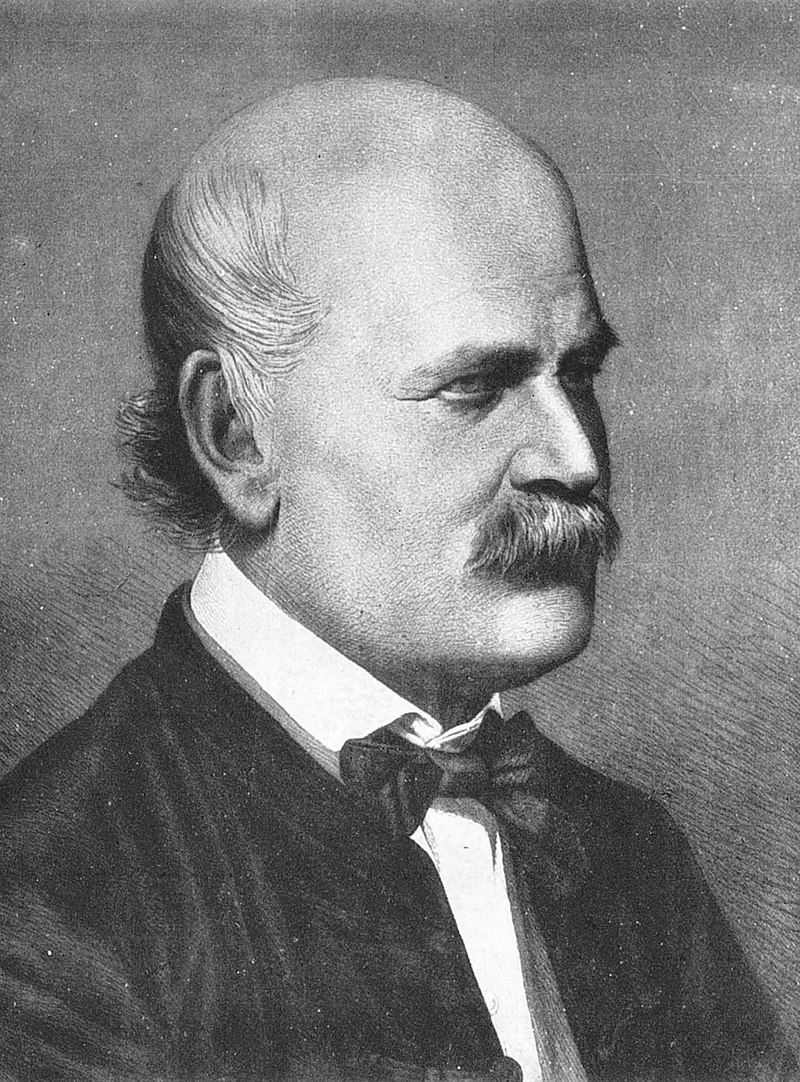
I vividly remember two of the early books that I read when I was nine or ten.  My family was still living in the same small house with my grandparents and my uncles.  My oldest uncle Moshe subscribed to a library of books translated to Hebrew. One of these books was The Good Earth.  By Pearl Buck.  Many of you know  this book about the life of women in China.  The other one was The Cry of the Mothers.  By Morton Thompson.  About Ignaz Semmelweis, the early pioneer of antiseptic procedures.
The Hebrew Title:
זעקת האמהות  - מורטון תומפסון


I was reminded of this story today while listening to my weekly radio program reviewing world press.  The French magazine "Historia" has just published an article about the life of Ignaz Semmelweis. 
An engraved portrait of Semmelweis: a mustachioed, balding man in formal attire, pictured from the chest up.


Ignaz Semmelweis is a curious child who often gets in trouble at school for asking too many questions. As a young man, he travels from his native Hungary to Vienna to study medicine, becoming an obstetrician at the Vienna Lying-In (labor and delivery) Hospital. At that time, in the first half of the nineteenth century, European women giving birth are ravaged by puerperal fever, a form of bacterial infection, before the germ theory of disease or antibiotics were known. The hospital unit operated by the medical school for training physicians had triple the death rate of that of the unit run by the midwives. To find out why, Semmelweis embarks on a painstaking investigation. Without knowing the mechanism at work, he discovers that infection is spread from one patient to another by contact, facilitated by frequent patient exams made by the medical students. Over the resistance and ridicule of the hospital administration and staff, he develops and implements a strict practice of hand washing with disinfectant before every patient contact. This brings the hospital death rate down to practically zero. Even so, the hospital administration and general medical community refuse to adopt Semmelweis’s ideas or practice. Enraged at the medical establishment’s failure to save lives by this simple procedure, Semmelweis writes letters to medical journals accusing physicians of being murderers. Eventually, more and more overwrought by his frustration, he becomes unbalanced, passing out handbills in the street telling women to demand of their doctors that they wash their hands, and otherwise behaving so erratically that he is committed to an insane asylum, where, ironically, through a cut finger he contracts and dies of the very disease he spent his life fighting.

A legacy of Semmelweis, highlighted in The Cry and the Covenant, is that hand washing, to this day, remains the most effective method of preventing the spread of infection.


Semmelweis statue at the University of Tehran.

What a sad end to the life of a brilliant man!
We can blame those Viennese doctors who could not accept the fact that their hands were "dirty".


Tuesday, August 30, 2016

Hungary Trip: Budapest Spa

Two more days in Budpest and since I got here I wanted to visit this big spa with a 76 degrees spring! The Hungarian name: Szechenyi Bath. I was driven by curiosity and I had one surprise after the other. 

You are given a plastic watch that allows you to get into your private changing room. 
The large pool welcoming you has a large fountain and a sign announcing the temperature of the water is 37-38 degrees Celsius. 


I got in and enjoyed the warmth of the water. There were streams of spring water coming from different spots in the floor and in the walls of the pool. 

Then I saw some people setting up a table for a DJ in a corner and a cameraman. They announced something in Hungarian and next thing a group of people got into the pool and started dancing to the music. I asked the cameraman what was the occasion. They are filming here twice a year for a TV channel. Two young American girls were singing along and dancing to the music of ABBA in Mama Mia and the BG's. 


The dancing group and the guys playing chess on the ledge of the pool!!

I went upstairs to try the thermal baths. There was a small pool of shallow water for people to wash their feet before they get in. This sign above it announces the content of the various salts in the baths:


This is why people used to come here for healing for many centuries. 


The thermal baths made me think of all the stories and movie scenes of Roman baths. 


This is the large cool water pool for swimming laps. Decorated with the ubiquitous statues. 

I left this great spa calm and relaxed!

Friday, August 26, 2016

Hungary Trip: The Country Side

visited my in laws in Felcut. They have a large garden in the back of the house. A large peach tree. A chicken coup. Anna calls it the zen garden. 


They have built a new football arena In Felcut. The Pancho Arena, part of the Puskas football academy. I was most amazed by the timber work. 


The small hotel in Biscke had a museum mini farm in the back. 


We took a drive to Tata with a beautiful lake and an old castle turned into a museum. 


We also strolled around Tatabaya and saw this big bird watching the city. 


Tatabanya also has the Jubileum Park where they had a festival on August 20. 


A visit to the Alcsuti Arboretum:


The visit in the grand city of Budapest was all different from this country side. 


Thursday, August 25, 2016

Hungary Trip: Shoes Monument

On my way to the parliament tour I heard about a Shoes monument erected in the memory of those shot into the river. 
I walked south on the bank until I found this touching display of bronze shoes. 
Plaques are in Hebrew English and Hungarian. 
They were asked to take off their shoes before they were murdered. 


Hungary Trip: Parliament


I am quite impressed with Budapest and today it is the amazing parliament. 
This building is one of the largest government buildings in the world. It was built in the 19th century at the time when Hungary was three times bigger than what it is today. 

A couple of photos of the model of the building from the museum down below. 


The guided tour started down at the basement and we climbed up over 120 steps to the top. The staircase is all lined with pure gold decoration. 


The exact center of the building is the dome where the crown is kept under the watchful eyes of two guards. 


This Grand Hall has a staircase with 96 steps. The number 96 is important in Hungary as the country was established in the year 896. 
No photos are allowed under the dome. The grand chandelier has more than 200 light bulbs. For maintenance the crew has to go over the ceiling. 


We also visited the assembly. The seats of the ministers and members of coalition and opposition. 


The voting system is electronic:


Outside the assembly room in the hallway facing the river they have these numbered ashtrays for mp's who go out to smoke their cigars. 


What an outstanding building!!