Showing posts with label biology. Show all posts

Thursday, July 14, 2016

Basic Science #8: Heavy Water. Hydrogen and Deuterium are Isotopes

Have you heard of HEAVY WATER?
Regular water  H2O, is made of two hydrogen atoms, one oxygen.
Hydrogen (H) has one proton and one electron, its atomic (proton) number is 1 with a mass of 1 Dalton.

Hydrogen has an isotope, meaning another element with the same number of protons, i.e. the atomic number, but a different mass of 2 Daltons because it has an extra neutron.  Thus, deuterium (D) is a stable isotope of hydrogen, it has 1 proton, 1 electron and 1 neutron.


Deuterium is a heavy isotope of hydrogen. Some of the water on earth has one or two deuterium atoms replacing the hydrogen.  D2O is heavy water as the deuterium is two times heavier than hydrogen.
Water is essential for life.  In our planet you can find water in all 3 phases: As ice in the glaciers, as water in the oceans and as vapor in the clouds.  Vapor of water contains deuterium and that makes water to have a higher viscosity and boiling point. Natural vapor or moist is always deuterium depleted compared to its water source and it always covers water and even ice.


Water-Cycle: A lesson from elementary school.  Remember?

As water tends to evaporate, it is the regular water that evaporates into clouds.  The water sitting in the depths will be enriched with deuterium, the heavy isotope of hydrogen, or heavy water.
I don’t recommend drinking heavy water.  D20 tastes almost exactly like H20. However, seeds will not sprout in heavy water, and when rats are given heavy water exclusively, they die of thirst although glutted with water. The D atom causes all processes in the body to slow down or come to a halt.
I’d like to introduce a dear esteemed colleague of mine, Laszlo G. Boros MD.


Dr. Boros has recently come upon the idea that we have been exposed too long to variable high levels of heavy water in our food and in our environment.  He has been studying the levels of D in different food sources and in many cancer patients.  He has published a number of scientific papers to test the assumption that deuterium depletion can be therapeutic in treating tumors.  
On top of all that he is convinced that some old civilizations knew about all this.  Most likely Dr. Boros believes this knowledge is conveyed in the Torah, in the five books of Moses.
Check out this presentation where Dr. Boros reads the Torah word by word and links it to biology and physics: 

Would appreciate any comments or questions.  It is a revolutionary idea.


Wednesday, April 13, 2016

Basic Science #7: Albumin

Albumin is a large abundant protein in our blood.  When blood is collected in a tube and left to stand, the red cells, containing hemoglobin will sink to the bottom.  The liquid on top is called serum or plasma.   Albumin gives it the yellowish color.  Serum also contains various components important for our overall health.  The white blood cells and platelets will be in between these two layers - in the interphase.


We should all know about a blood test for Albumin (by my health care provider):
Normal amounts of Albumin: 3.3 - 4.8 g/dL. Albumin is a protein that is made in the liver and released into the blood. It helps keep the blood from leaking out of blood vessels. Albumin also helps carry some medicines and other substances through the blood and is important for tissue growth and healing.
Chemistry of albumin: Human serum albumin - HSA is made of 609 amino acids.  (Yes six hundred and nine amino acids!)  Bovine serum albumin - BSA has a very similar chemistry with small differences in amino acid sequence.   Here is the 3D structure of both proteins pointing out this specific difference:

Human and Bovine Serum Albumin:


The similar structure of albumin in various organisms can be followed from lower organisms to higher ones.  This is the scientific base of evolution.  In comparative genetics the scientists can compare the amino acid sequence of mouse, rat, dog, bovine and human and show the homology.  There is a higher fit or homology between human and bovine, than between human and mouse.
Albumins belong to a group of proteins described as globular proteins, referring to their spherical shape.  This shape makes them soluble in water, so their location in the cell is in the aqueous, or water environment.  Some proteins are membrane proteins which means they are not soluble in water and will be attached to the cell wall or membrane. 
An important aspect of biochemistry of proteins is transport of nutrients or drugs depending on their solubility in water.  Albumin has an important role as a “universal” solvent.  Here you can see how Albumin can attach various molecules as fatty acids which are lipids, or calcium which is a small ion, and transfer them through the blood to their destination in the body.


Albumin attached to various drugs and nutrients:


In this post on Albumin I have introduced the principles of soluble and membrane proteins and some basis of evolution. I hope more people would study these topics and learn to appreciate our amazing complex biology.

Thursday, March 10, 2016

Basic Science #6: Hemoglobin

Hemoglobin was the first protein that we studied in biochemistry.  I have great fondness for this protein. 
Before I start talking about the chemistry of hemoglobin you should remember a few facts:
*Everybody knows this important protein in our blood. 
*It gives blood the red color because it contains an iron ion. 
*It is essential for binding oxygen and so it gives us energy. 
*Levels of hemoglobin in the blood are measured in any standard blood test. 
*Hemoglobin levels are higher in men than in women and that is one reason why men are usually stronger.
*Hemoglobin levels correlate with the number of red blood cells and levels of iron.  If hemoglobin levels are low it is often caused by iron deficiency anemia.
*The part of the protein that contains iron is called heme.
As I was studying the biology of proteins one fact always amazed me.  My childish impression was that the protein was made once and stayed like that.  But I found out that our cells are continuously making and breaking the proteins according to their need in the machinery of the cell.  If your cell needs the energy it will make more hemoglobin.  While you rest it will break down the protein to its individual amino acids.  And both these processes are very finely controlled.  It is amazing how super intelligent our cells are.

Chemistry of hemoglobin.

Check out this 3D model of hemoglobin:


Hemoglobin is made of 564 amino acids.  Molecular weight of hemoglobin is around 50,000 (For comparison: Oxygen molecule is 16, it fits in a small pocket of hemoglobin.)
Now try to imagine how these 564 amino acids fold in the cell to make the two subunits: a and b. These two subunits then double up to form a tetramer with two of each subunit.  Then the heme is inserted in each of the four subunits for a fully active protein enabling the special function of the hemoglobin - the transfer of the oxygen.  An alteration of any part of this structure of hemoglobin would cause inability to execute its duty of carrying oxygen.
I was really amazed to learn how complex is the structure of such an important basic protein.  The more I learn about the mechanism of action of proteins in our biology I am stunned to see the intricacy of it all.  

To add to the complexity of this we now measure levels of hemoglobin a1c in diabetes patients.  The high level of glucose molecules in the blood causes them to attach to the hemoglobin to form glycated hemoglobin:


I am thankful every day for the way my cells allow me to continue breathing and thinking, running and dancing!

Monday, February 29, 2016

Basic Science #5: Discovery of DNA Structure

Good friends of mine were trying to understand chemistry and they asked me this question: How can you see molecules?  How do they know about atoms?
Here is my answer on many levels. 

Lets start with this early x-ray picture of the DNA molecule next to Rosalind Franklin who succeeded in producing it:


The steps leading to this image were first and foremost the basic curiosity: We want to know!  Then those curious people start looking and finding things out step by step. 
Discoveries in science are always based on previous knowledge.   Most of the time it takes a team of people cooperating with their shared curiosity and intelligence to figure out the most astounding facts of nature. In the case of DNA there were the previous methods to isolate the genetic material from Bacteria.  It was known how to label it with radioactive material.  The newest technology was x-ray crystallography.  Rosalind Franklin was a bright researcher trained in this technique.  She produced these now famous images and was just about to decipher them. After working for years with the unsafe radiation she developed ovarian cancer and died before she could get any recognition.
An additional level in all this is the personalities of these bright researchers.  Often we find that the most studious hard working researcher is looked over and someone new with a strong ego takes over and takes all the credit.  James Watson an American molecular
biologist and Francis Crick the Physicist from UK were working on this project at the same time.  They got hold of Rosalind Franklin's x-ray images and worked together to discover the detailed structure of the DNA double helix:


This was not a simple task.  It involved the knowledge that this genetic material includes the four nucleic bases.  These four basic structures are found in the nucleus of the bacteria cell, and that is why they are named nucleic bases.  The initials are A, G, C, T. 
You will find these letters in DNA sequences.


They also knew that the DNA material includes the sugar ribose with one less oxygen (deoxyribose) and phosphate.

They had to build the model of these bases and figure out the structure so that it will fit the x-ray image. James Watson and Francis Crick were the firsts to publish this result and win the Nobel Prize.  The Nobel Prize in Physiology or Medicine 1962 was awarded jointly to Francis Harry Compton Crick, James Dewey Watson and Maurice Hugh Frederick Wilkins "for their discoveries concerning the molecular structure of nucleic acids and its significance for information transfer in living material".
The most amazing part of this research is that this structure predicts that every 3 nucleic bases will be a code for one amino acid.  This is how the genetic material in the cell nucleus is translated to proteins in the cell.  The proteins that are part of the structure of the cell and have many metabolic activities.
This discovery has connected chemistry and biology!  
Fifty years later Francis Crick predicted that the next breakthrough in science will be the connection between bilogy and behavior!
.

Friday, February 19, 2016

Basic Science #4: Amino acids as building blocks for proteins.

Amino acids are the basic building blocks of proteins.  Proteins can be very complex, up to thousands of amino acids attached to each other in a chain to make a protein.  Here is a simple amino acid: Alanine.  As I showed you it has an amino group NH2 which is basic (blue) in pH and a carboxyl group COOH which is acidic (red.)

Two amino acids are connected to each other in a peptide bond.  The next amino acid will be connected to the previous peptide via the carboxyl group, so that each chain of amino acids bound together will have an amino end and a carboxyl end.


To understand the complexity of proteins I will bring here a table of the 20 amino acids in life.  The names of the acids were given by the Greeks historically according to their source (like Serine was isolated from silk) or their color (Leucine for white.)  But it is more important to understand their diversity in structure. The position of the amino acid in the protein will determine how the protein will interact with its surroundings and what will be its activity. 
To envision this check the following table.  The amino acids are categorized in 5 groups.  First by their interaction with water: a hydrophilic amino acid  will be in a water environment and a hydrophobic amino acid (turquoise) will be in a fat environment as a cell membrane of a fat cell.
Next the hydrophilic amino acids can be polar but uncharged (grey.) They can be basic with two amino groups (blue) or acidic with two carboxyl groups (red.)


The order of the amino acids in the chain is just the primary structure of the protein.
The next level of complexity is the secondary structure, the way this amino acid chain twists and turns, as a helix.  Sometimes to the right, sometimes to the left and this is called a and b helix.


The next level is the tertiary structure, this is caused by bridges of bonds between two different parts of the protein.  These bridges are made with di-sulfide bonds between two amino acids that contain sulfur: Cysteines. 

There is a Quaternary structure as well by combining a whole folded protein with another similar (or different) sub-unit to make a dimer, a trimer and so on.  All the different possible combinations exist.  This is one way to show how we have such an amazing beautiful diversity in life!

Tuesday, February 9, 2016

Why are you Still Alive?


I heard about this article published by the Readers Digest last November.  This should interest all of us as we are hearing about the zika virus affecting the babies born to women infected by the virus.
We should remember that just one hundred fifty years ago life expectancy in humans was no longer than forty years.  People did not always live to see their grandchildren, let alone great grandchildren.  These days people in the developed world live into their eighties and nineties and are still healthy and active.
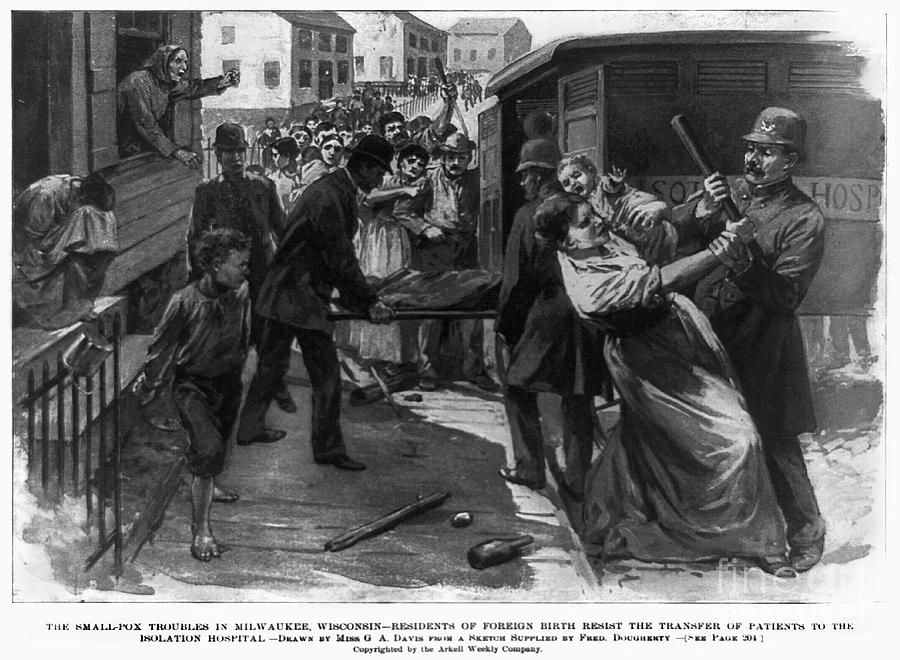
It is important to understand the progress that brought about this long life expectancy.  On the top of the list is the fact that we learned to cure bacterial and viral diseases.  Smallpox was a viral disease that killed more people than any other illness or factor.

Smallpox-1894

We also managed to abolish disease as bacterial TB and cholera which causes loss of water.
Next on the list is the fact that we learned to use soap to clean up and mainly wash our hands.  We learned to avoid touching bacteria and transferring them to anything we touch.
The houses in which we live protect us from the weather, rain storms, winds and heat.  Modern houses are well  air conditioned unlike the  poor huts in the third world.
At last we should appreciate the clean running water in our modern homes.  This is thanks to the governments who provide this service of providing running water.  And note where the government of Michigan failed its citizens in Flint.  It is not taken for granted that governments can always be trusted.
It is important to remember what is keeping us alive and healthy for so long!